REVIEW · HOBART
Kunanyi & Mt Wellington Explorer Bus: One-Way Bus Pass
Book on GetYourGuide →Operated by Red Decker Company · Bookable on GetYourGuide
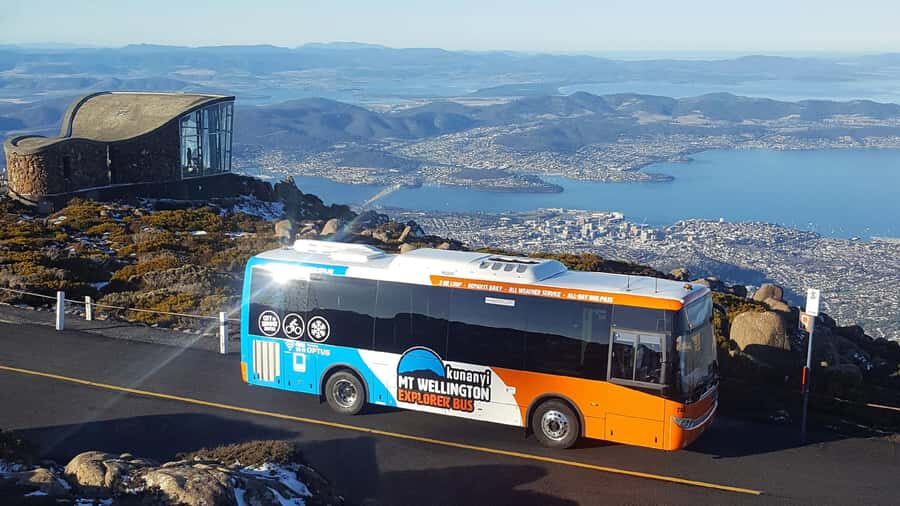
Summit views without the slog. The Kunanyi/Mt Wellington Explorer Bus takes you one-way from Hobart’s waterfront up to the summit at 1270 m, with English commentary that helps you read what you’re seeing over Hobart and beyond. It’s a great way to get the hard-to-reach elevation part done fast, then spend your time choosing your own pace on the way down.
What I like most is the combination of a short, comfortable ride and a flexible return plan. You can walk down (a stunning 3-hour, 13.6 km route) or use a mountain bike—plus the bus can carry bikes with the right booking. The main drawback to plan for is that the descent is on you: if your knees aren’t loving steep grades, your legs may feel it the next day.
In This Review
- Key takeaways
- The short ride up: 50 minutes from Hobart’s waterfront to 1270 m
- What you’ll likely see on the way up
- Summit time at Kunanyi/Mt Wellington: where you control the mood
- Food and water: plan ahead for the summit reality
- Walking down to Hobart: the 13.6 km viewpoint-to-city payoff
- How to make the walk enjoyable instead of painful
- Biking down: a faster return with easier effort management
- Who biking down is best for
- Commentary and on-the-ground guidance: why the bus isn’t just transport
- Weather reality: the alpine day you should pack for
- Price and value: $24 for one-way access that turns into a full mountain outing
- Who this works best for (and who should look elsewhere)
- Practical tips to help your day go smoothly
- Should you book the Kunanyi/Mt Wellington Explorer Bus one-way pass?
- FAQ
- How long is the bus trip to the summit?
- Where does the bus depart from in Hobart?
- Do I return to Hobart by bus?
- Can the bus carry mountain bikes?
- How much colder is it at the summit?
- Is there food and water available at the summit?
Key takeaways
- One-way to the summit at 1270 m, so your energy goes into views and the descent you choose
- 50 minutes of narrated riding that sets context for Hobart, Wellington Park, and the alpine feel
- Walk down is a real day-scale hike: about 3 hours and 13.6 km, not a casual stroll
- Mountain bikes are an option, with approx. 1-hour ride down if you book bike freight
- Weather changes fast: about 10°C cooler than Hobart, and you can hit sunshine, wind, rain, and even snow
- Free Wi-Fi on board and a Wellington Park bushwalking map to help you plan once you’re up there
The short ride up: 50 minutes from Hobart’s waterfront to 1270 m
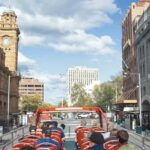
This is a simple idea with smart execution: you take the one-way bus from Hobart to the Kunanyi/Mt Wellington summit, then you handle the descent. The bus departs daily from the waterfront, and you’ll want to be at the bus stop outside Brooke Street Pier at least 10 minutes early. If you’re the type who hates stress timing on vacation, being early here makes everything smoother, especially if you’re bringing a mountain bike.
The ride itself is about 50 minutes, and that’s long enough to settle in, but short enough that you’re not wasting daylight. You’re going upward into a genuinely alpine environment, so the temperature shift matters. The summit is roughly 10°C cooler than Hobart, and the weather can flip quickly—sunshine, wind, rain, and even snow are possible. That’s the first thing I’d plan around: dress for the mountain, not the city.
Inside the bus, you get a professional, informative English commentary, plus free Wi-Fi onboard. The commentary helps the views make more sense. Instead of just seeing “a big mountain,” you start noticing how Hobart sits in relation to the water, the city spread, and the patterns of the park. It’s also one of those experiences where the guide keeps things lively without turning it into a lecture.
You can also read our reviews of more tours and experiences in Hobart.

What you’ll likely see on the way up
You’re climbing from the waterfront toward Wellington Park, and the terrain changes as elevation increases. Expect a gradually expanding view over Hobart and surrounding areas as the bus gains height. Even if clouds roll through, the narration can still help you make sense of what you’re passing and what the summit might reveal when the weather clears.
Summit time at Kunanyi/Mt Wellington: where you control the mood
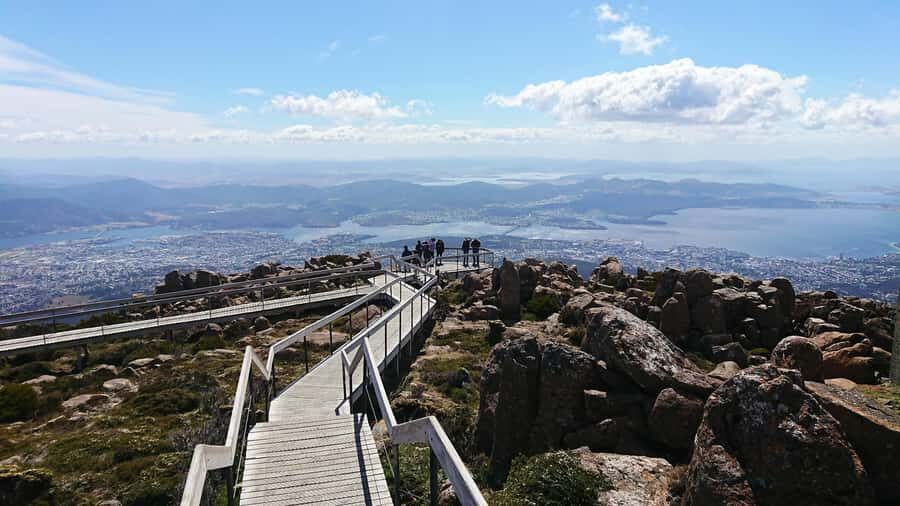
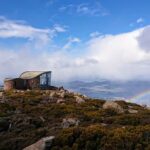
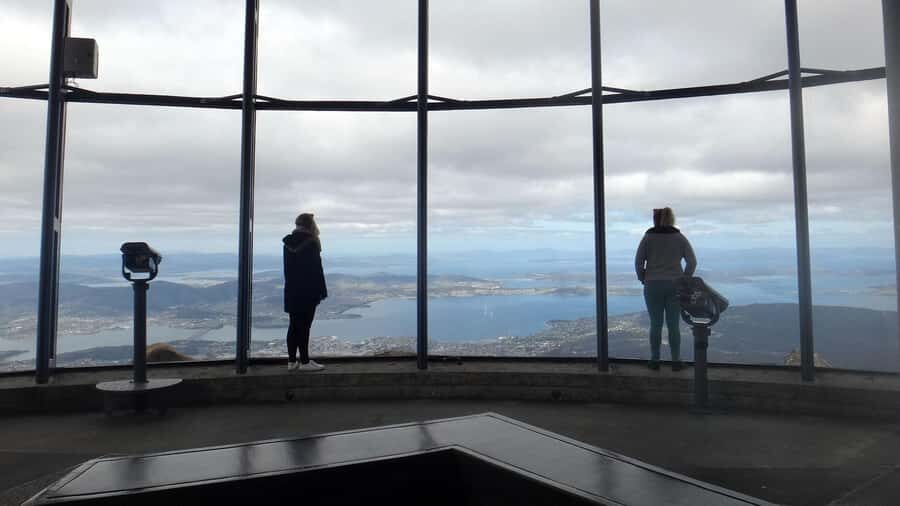
Once you reach the top, your job is easier but more important: decide how you want to experience the summit area before you head back down. You’ll have access to Wellington Park and the summit itself, and you’re given a bushwalking map for the area.
This is where the one-way structure really shines. You can tailor the experience:
- If you’re feeling energetic, you might build your descent around trails.
- If you’re taking it easy, you can focus on viewpoint time and choose a more straightforward route down.
- If you prefer momentum, the mountain bike option lets you cover distance fast while still using your legs (just differently).
The key thing is to treat the summit like a “weather-sensitive zone.” Since it’s often colder and windier up there than down in Hobart, you’ll want warm layers ready, even if the city looked mild earlier. Comfortable shoes are also non-negotiable if you’re walking.
Food and water: plan ahead for the summit reality
Food and water access is limited at Kunanyi/Mt Wellington, so you should assume you’ll need to bring your own. If you forget, you do have nearby options in the broader area—Lost Freight Cafe at The Springs, or Fern Tree Tavern near Fern Tree Park. That’s useful context if you’re thinking longer-term about where to eat after your descent.
Also: don’t underestimate how long 3 hours feels when you’re focused on views. Bring water even if you think you won’t need it right away. The mountain can keep you cooler than the city, which can mask thirst.
Walking down to Hobart: the 13.6 km viewpoint-to-city payoff
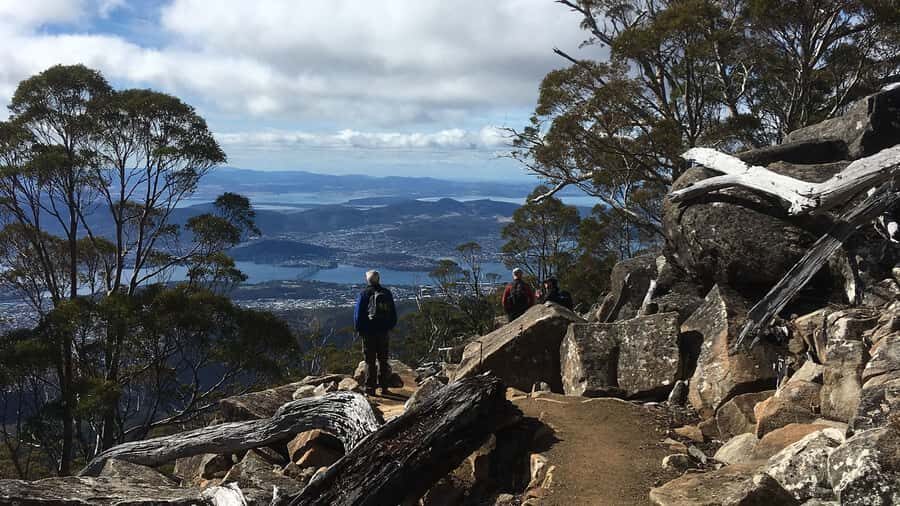
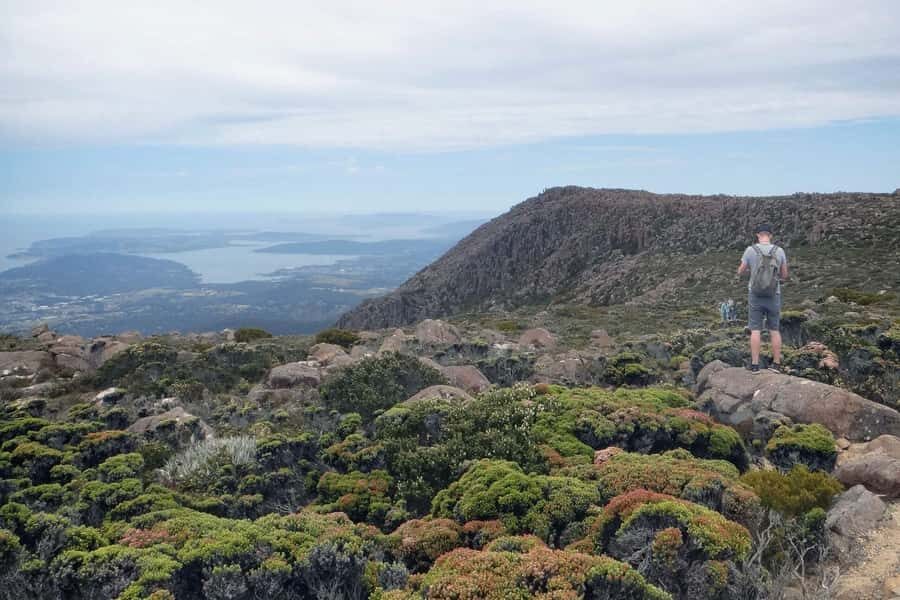
Your return plan is the heart of this experience, and walking is the classic choice. The descent from the summit to Hobart is about 3 hours (13.6 km). That duration puts it in “actively hiking” territory, not “wander around a bit.” Your pace will depend on weather, trail conditions, and how many times you stop to stare at the view.
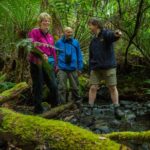
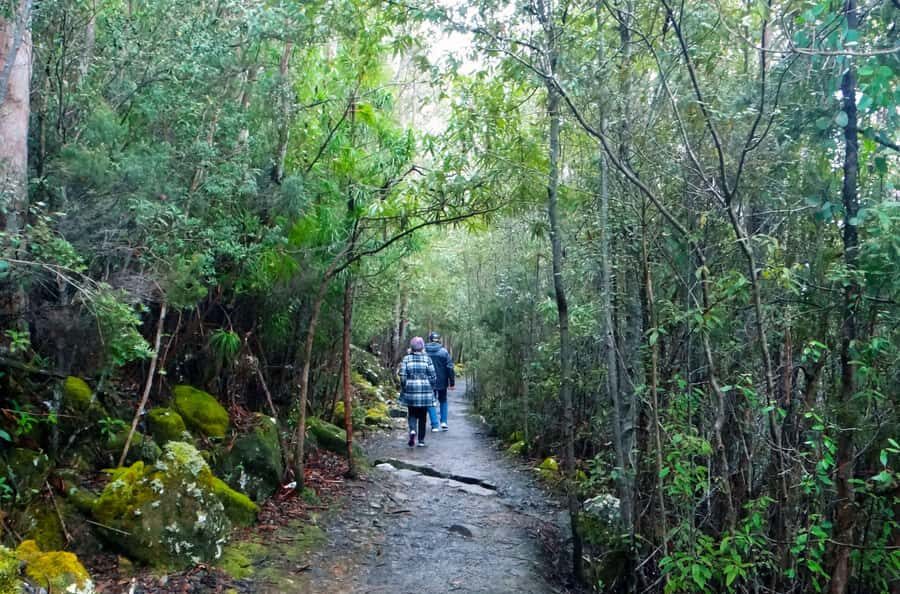
The upside? Walking lets you feel the mountain’s transitions. You get a gradual shift from summit wind and alpine conditions toward the more sheltered look of the city as you drop elevation. You’ll also pass through the growing network of bushwalking tracks throughout Wellington Park, which makes it feel less like a single route and more like you’re moving through a living park system.
The potential drawback is leg fatigue. One of the clearest cautions from real-world experience is that even fit people can feel it the next day. If you have knee issues or know you dislike steep grades, walking might still be doable, but you’ll want to pace yourself and use breaks to keep your body happy.
How to make the walk enjoyable instead of painful
- Wear comfortable shoes you trust on uneven ground.
- Bring layers you can remove if you warm up—wind can be intense on descents.
- Plan to stop often. This hike is built for scenery, not speed.
- If weather looks threatening, treat that as a cue to slow down, not push onward.
Biking down: a faster return with easier effort management
If you’d rather spend less time descending on foot, mountain biking is the alternative that fits this experience perfectly. The ride from Kunanyi/Mt Wellington down the mountain is approximately 1 hour.
But bikes don’t just magically appear on board. The buses can carry up to 4 mountain bikes per departure, and bike freight has to be reserved. The cost is $10 per bike, and you need to book it no less than 30 minutes prior to departure. You’ll also need extra time to get your bike loaded at the correct stop—there’s guidance that you should allow plenty of time to make your way to Bus Stop 1 – Brooke Street Pier to load before departure.
Who biking down is best for
Biking down is great if:
- You want to maximize viewpoint time while minimizing time on your feet.
- You’re comfortable with mountain biking on trails.
- You prefer faster circulation back toward Hobart.
The caution is obvious: you still need to handle a steep descent. Even at 1 hour, you should dress properly, use secure riding gear, and ride with the mountain’s potential weather shifts in mind.
Commentary and on-the-ground guidance: why the bus isn’t just transport
A big part of why this feels like more than a shuttle is the professional commentary. The guide talks through what’s around you and often lands on practical tips—especially helpful because your next step is choosing how to get down.
From the information you get on board, it’s easier to understand where you are in Wellington Park, what kind of environment you’re in, and how the descent options connect to the trail network. In past runs, guides including Greg and ChristIan have shown up as standout personalities—storytellers who also share useful walking tips at the end of the ride.
Even if you’re confident you’ll figure it out on your own, this narration helps you get better at reading the mountain quickly. That’s the real travel value here: you’re not just watching scenery pass; you’re learning how to interpret it.
Weather reality: the alpine day you should pack for
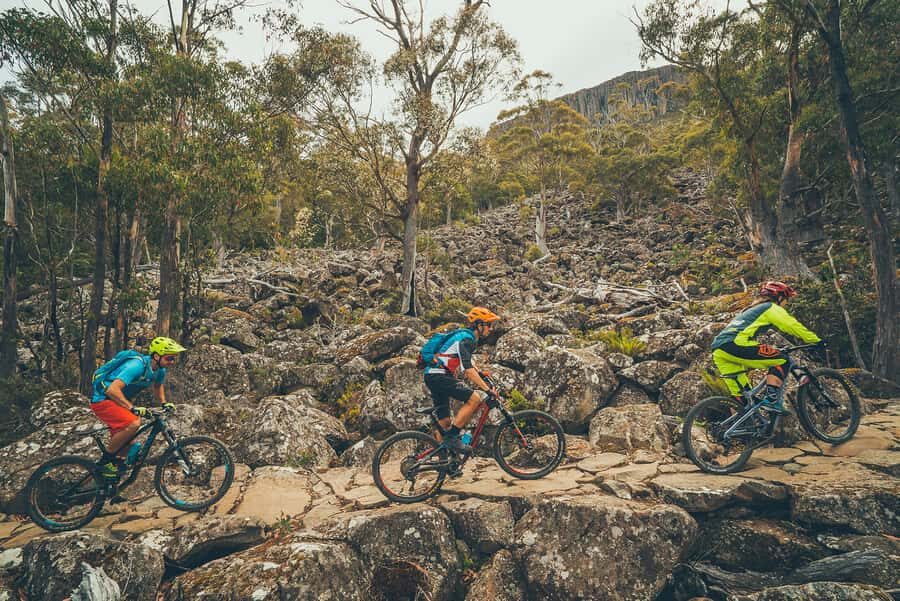
If you do just one thing to improve this trip, it’s this: treat the summit like it’s a separate climate. The summit can be about 10°C colder than Hobart, and you may face wind and rain, with snow possible. That means even on a “nice” Hobart morning, the summit could feel totally different.
Bring:
- Warm clothing
- Comfortable shoes
- A plan for wind and rain
And keep your expectations flexible. If the summit views are obscured by cloud, you’ll still benefit from the park experience, the commentary context, and the opportunity to choose how you descend. On the other hand, if conditions are clear, the views can be spectacular, with panoramas over Hobart and beyond.
Price and value: $24 for one-way access that turns into a full mountain outing
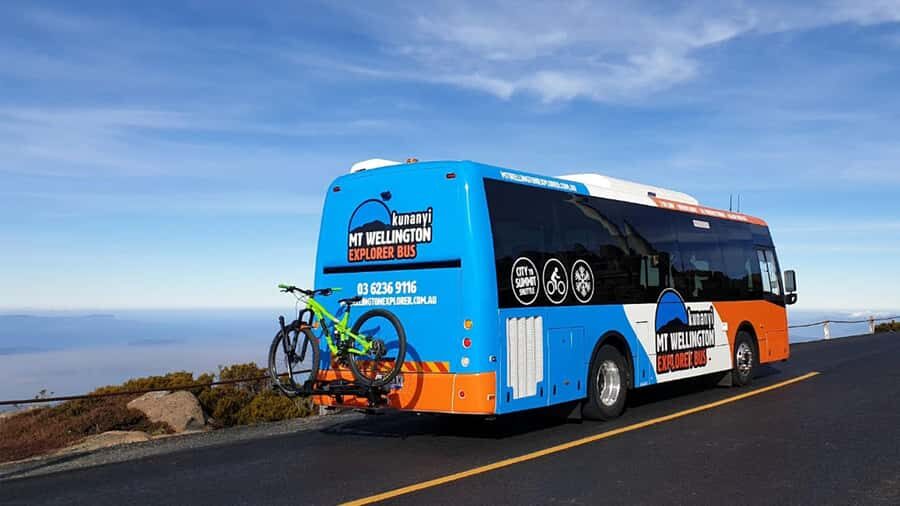
At $24 per person, the bus portion isn’t a budget-busting splurge. The real value is what the one-way format buys you: you spend money to get to the summit efficiently, then you turn it into either a hike or a bike descent you control.
This isn’t a guided walking tour with a set itinerary of stops. Instead, you get:
- The lift-up component
- Information and orientation through the onboard guide
- A map and access to Wellington Park
- The freedom to return on foot or by bike
So, for value, ask yourself one question: do you want the mountain experience but not the uphill challenge? If yes, this is a strong deal. If you want a full guided day with fixed activities, you might prefer another style of tour.
Who this works best for (and who should look elsewhere)
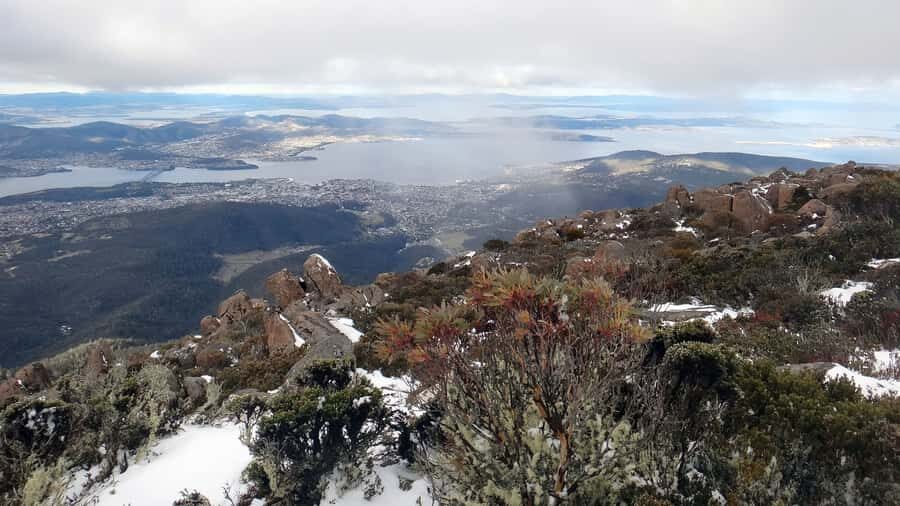
This experience is a great fit if you want:
- Spectacular views over Hobart without committing to an uphill climb
- The flexibility to descend at your preferred intensity
- An easy-to-start day from the waterfront
- English commentary and helpful guidance before you head off on your own
It may not be the best match if you:
- Want a short, casual stroll only
- Have trouble with steep downhill movement
- Don’t want to manage your own return logistics
Practical tips to help your day go smoothly
A few small choices can make the biggest difference.
First, build your descent plan around your body, not your ambition. The walk is about 3 hours and 13.6 km. That’s manageable for many people, but it’s still a hiking workout. If your knees are sensitive, consider biking down or taking more frequent breaks.
Second, pack for rapidly changing conditions. Even if you start with a light jacket, you’ll likely want layers once you’re near the summit.
Third, if you’re bringing a bike, treat bike freight like part of the schedule, not an add-on. With limited capacity (4 bikes per departure) and a $10 cost, you’ll want to reserve early and arrive with enough time for loading.
Should you book the Kunanyi/Mt Wellington Explorer Bus one-way pass?
I’d book it if you want a clean, efficient way to reach the summit and then enjoy the mountain on your terms. The combination of a short 50-minute ride, English commentary, and access to Wellington Park gives you a strong mix of orientation and freedom. And if you’re excited to walk or bike down, the one-way format makes the value feel obvious: you’re paying for the hard-to-achieve elevation, not a package of time you’d rather use outside.
Skip it or think twice if you’re looking for a purely easy outing. The descent is real—especially the 3-hour, 13.6 km walk—and it’s not designed to keep you seated. But if you’re up for a scenic workout (or an efficient bike ride), this is one of the most practical ways to experience Kunanyi/Mt Wellington from Hobart.
FAQ
How long is the bus trip to the summit?
The one-way bus trip to Kunanyi/Mt Wellington is 50 minutes.
Where does the bus depart from in Hobart?
The buses depart daily from the waterfront, and you should be at the bus stop outside Brooke Street Pier at least 10 minutes before departure.
Do I return to Hobart by bus?
No. This is a one-way pass to the summit. You make your own way back down to Hobart on foot or by mountain bike.
Can the bus carry mountain bikes?
Yes. The buses can carry 4 mountain bikes per departure. Bike freight costs $10 per bike and needs to be booked no less than 30 minutes prior to departure.
How much colder is it at the summit?
The temperature on Kunanyi/Mt Wellington is about 10°C cooler than in Hobart city, and you may experience changing weather including sunshine, wind and rain, and even snow.
Is there food and water available at the summit?
Food and water access on Kunanyi/Mt Wellington is limited, so it’s best to bring your own. If you need alternatives, Lost Freight Cafe (at The Springs) and Fern Tree Tavern (near Fern Tree Park) are nearby options.