REVIEW · HOBART
Historic Battery Point
Book on Viator →Operated by Hobart Walking Tours · Bookable on Viator
Battery Point works like a time machine. This 2-hour walk from Parliament House to Salamanca Place brings Hobart’s old homes and quirky characters to life at a relaxed pace.
I love the live commentary with a guide who connects buildings to people, not just dates. I also like how you see the neighborhood’s mix—grand colonial-style homes side by side with smaller worker cottages—so you get a real sense of who lived here and how trade shaped the streets.
One thing to consider: it’s still a walking tour along city pavements, and it runs in all weather. You’ll want good shoes and to use the spots to sit or perch when you need a breather.
In This Review
- Key things that make this walk worth your time
- Starting at Parliament House: a waterfront walk with a clear focus
- Arthur Circus: where a crooked tale adds real flavor
- Battery Point’s past in one neighborhood: from Cottage Green to old homes
- Following the money: how trade and Navy supply shaped the streets
- Governor Arthur, Reverend Knopwood, and why the characters matter
- Alexander MacGregor and the Georgian home that still shows the boom
- Finishing at Salamanca Place: market proximity without the scramble
- Price and value: what $27.26 buys you in a small group
- How hard is the walk, and who will enjoy it most?
- What to do before and after so the day flows
- Should you book Historic Battery Point?
- FAQ
- Where does the tour start and end?
- How long is the Historic Battery Point walking tour?
- Is the tour strenuous?
- What’s included in the ticket price?
- Is food or drink included?
- How many people are in a group?
- Does the tour run in bad weather?
- What is the cancellation policy?
Key things that make this walk worth your time

- Live guide commentary that turns streets and stonework into real stories
- Parliament House and Arthur Circus as strong starting anchors for the area’s timeline
- Battery Point architecture from colonial estates to simpler cottages, showing changing wealth
- Character-driven history tied to Governor Arthur, Reverend Knopwood, and Alexander MacGregor
- A satisfying finish at Salamanca Place, near Hobart’s famous Saturday market
Starting at Parliament House: a waterfront walk with a clear focus
You meet outside Parliament House on the waterfront near Salamanca Place. That’s a smart way to begin, because it helps you get your bearings fast—Parliament gives you an obvious reference point, and the waterfront location makes the whole outing feel grounded in real Hobart, not a theme park.
From the start, the guide sets the tone with live commentary about the district and the people who lived there. You’re not just looking at facades. You’re learning how the area developed, why certain houses ended up where they did, and what role trade and shipping played in the neighborhood’s growth.
The pace is meant to stay leisurely. It’s a walking tour along city pavements for about two hours, and there are places to sit or perch along the route if your legs ask for a pause. That makes a big difference for comfort—especially if you’re mixing this tour with other Hobart plans like museums, waterfront time, or a market visit afterward.
You can also read our reviews of more historical tours in Hobart



Arthur Circus: where a crooked tale adds real flavor
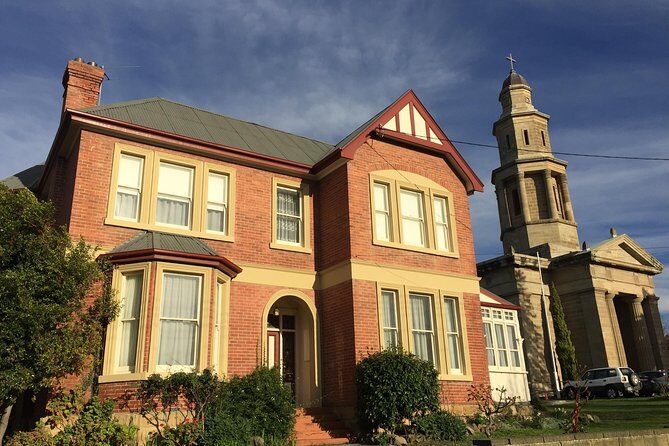
A major stop on the way is Arthur Circus, and it’s a good one. Circles in cities often feel like design flourishes, but here the storytelling gives Arthur Circus context you wouldn’t find by just taking a photo.
You’ll hear the guide talk about Governor Arthur and the more dubious side of property dealing connected to him. It’s the kind of story that makes you look at the street grid differently, and it adds personality to what might otherwise be viewed as just another scenic intersection.
This is also where the tour starts to feel like more than architecture spotting. You’re learning how power and money moved—who benefited, who got pushed aside, and why the physical layout matters. If you enjoy history that’s human (and sometimes a bit cheeky), Arthur Circus is where the tour starts to click.
Battery Point’s past in one neighborhood: from Cottage Green to old homes

The Battery Point neighborhood is often described with big-picture history, but the walking approach makes it feel personal. The guide explains that the area was once farmland known as Cottage Green. That alone is worth hearing, because it frames what you’re seeing: this neighborhood wasn’t always a tight cluster of homes and streets.
As you walk, you’ll notice how the homes reflect different eras and different levels of wealth. The district includes some of the oldest homes in Tasmania, and you’ll view a range of architectural styles. The tour highlights everything from colonial estates to quaint cottages for workers.
That mix is the point. It’s easy to focus only on the grand homes, but the tour helps you see the contrast. You learn how wealth flowed into Battery Point through the influx of trade and British Royal Navy shipping—timber, wool, and rum moved through Hobart’s Salamanca docks and warehouses, and that commercial energy shaped who could afford what.
For me, this is the value of this style of guided walk: you come away understanding the neighborhood’s “why,” not just its “what.”
Following the money: how trade and Navy supply shaped the streets

Battery Point’s stories make more sense once you connect the neighborhood to Hobart’s working waterfront. The guide ties the area’s growth to the British Royal Navy shipping timber, wool, and rum arriving at Salamanca. That trade wasn’t abstract—it created jobs, fortunes, and demand for housing.
As you move along the quiet, elegant streets, you get a sense of how quick success could become permanent property. The guide’s narration helps you picture the pipeline: docks and warehouses supply goods, trade brings cash, and that wealth eventually settles into architecture you can still see today.
This part of the tour is especially good if you like economic history presented in plain language. It’s not just “things were happening.” It’s “here’s how the money arrived, and here’s what it built.”
Also, it’s a good mental reset from the usual cruise-ship rhythm. Instead of rushing through highlights, you slow down and let the streets do the talking.
Governor Arthur, Reverend Knopwood, and why the characters matter

Historic districts can feel like a list of names. This tour keeps things lively by turning personalities into story engines.
You’ll hear about Governor Arthur, including the dubious property dealings connected to him. That story works because it explains the power dynamics behind who got land and who ended up with fewer options.
Then you’ll learn about the Reverend Knopwood and the fall of his carousing—again, a human tale that adds texture to the era. It’s the kind of story that makes you realize the past wasn’t made only of paperwork and sermons. People partied, they made mistakes, and reputations shifted.
What I like here is that the humor isn’t random. It’s tied to the neighborhood’s social structure. When you understand who had influence and how it could slip, the architecture feels more than pretty. It becomes part of a bigger social story.
And if your guide is one of the names that repeatedly gets praised—like Lisa or Bec—you’re likely to get extra energy and sharp storytelling. Those guides are highlighted for turning the walk into something fun while still covering the important details.






Alexander MacGregor and the Georgian home that still shows the boom

One of the most memorable threads in Battery Point history is linked to ship-building wealth. You’ll hear about Alexander MacGregor, a ship-building tycoon, and how his success connected to the neighborhood’s development.
The tour notes that one of his finest grand Georgian homes still stands today. That’s a big deal, because it lets you connect a person’s business story to a specific surviving building style, not just a general timeframe.
This is also where the walk becomes very satisfying for photo lovers. You’re not hunting for scenery; you’re learning what you’re looking at. The guide helps you notice details and understand why certain homes look the way they do in the context of the wealth that fueled their construction.
Even if Georgian architecture isn’t your main interest, the MacGregor story ties into the broader theme of trade and shipping that runs through the whole tour.
Finishing at Salamanca Place: market proximity without the scramble

At the end, you reach Salamanca Place, the site of Hobart’s popular Saturday market. Even when it’s not Saturday, the area has that familiar market-city vibe and is a great place to transition from “history time” to “food and wandering time.”
This finish point is practical. It means you can wrap up the tour and quickly continue your day—coffee, browsing, or just decompressing near a well-known public space. The guide is happy to point you toward favorite cafés for a reviving coffee after the walk, which is a helpful touch if you want something nearby without hunting around.
And because you’re finishing at Salamanca Place, you’re set up for an easy second act. If you do happen to be there on Saturday, you’re in the right spot to experience that market energy where it naturally belongs: right at the waterfront district that helped power the city.
Price and value: what $27.26 buys you in a small group

The price is $27.26 per person, and the tour runs about two hours. That’s a straightforward spend, but the value comes from what’s included: a professional local guide and live storytelling that ties buildings to people and trade.
The group size is capped at a maximum of 8 travelers. Smaller groups usually mean better pacing and more room for questions—especially helpful when the guide is covering quirky figures like Governor Arthur and Reverend Knopwood. You also get more of that “guided walk” feel rather than a moving crowd.
Timing matters too. The average booking window is about 61 days in advance, which suggests this tour has steady demand. If you’re traveling in peak periods or you want a specific day, earlier booking is a smart move.
Bottom line: for a walking tour, the cost feels fair because you’re paying for interpretation, not just access. You’re buying context and clarity, delivered at human speed.
How hard is the walk, and who will enjoy it most?
This is described as an easy walking tour along city pavements. Most people can participate, and there are places to sit or perch along the route if you need a break. The tour also runs in all weather conditions, so you should dress appropriately and be ready for typical Hobart variation.
This is ideal if you:
- Like architecture, but want to understand the story behind it
- Enjoy history that includes personalities, not just dates
- Want a low-stress plan that still feels meaningful
- Are pairing this with market time at Salamanca Place afterward
It’s less ideal if you’re expecting a fast, stop-and-go highlights sprint. This walk is built for lingering, asking questions, and absorbing how the neighborhood evolved.
What to do before and after so the day flows
Before you go, wear shoes that work on city pavements. Bring a light layer or rain protection since the tour operates in all weather, and keep water handy like you would for any two-hour walk.
After the tour, head to Salamanca Place for coffee and browsing. If you’re there on Saturday, the market proximity makes it easy to continue without changing locations or adding transport steps.
If you like layering experiences, you can also use this walk as your “orientation” for Hobart. Once you understand how Battery Point connects to shipping and trade, other parts of the waterfront start making more sense too.
Should you book Historic Battery Point?
Yes—if you want a guided, story-led introduction to Battery Point that doesn’t feel rushed. The big wins for me are the live guide commentary, the neighborhood’s mix of housing styles, and the way the tour connects the district to Hobart’s waterfront trade.
Skip this only if you dislike walking in any weather or you need something more fast-paced and ticketed with lots of indoor stops. Otherwise, this is a solid use of a couple hours in Hobart—especially with its convenient start at Parliament House and finish right by Salamanca Place.
FAQ
Where does the tour start and end?
The tour starts at Parliament House, 1 Salamanca Pl, Hobart TAS 7000, and ends at Salamanca Place, Salamanca Pl, Hobart TAS 7000.
How long is the Historic Battery Point walking tour?
It lasts about 2 hours.
Is the tour strenuous?
It’s a walking tour along city pavements and is described as suitable for most travelers. There are places to sit or perch along the route.
What’s included in the ticket price?
The tour includes a professional local guide and live commentary.
Is food or drink included?
Food and drinks are not included. The guide can point you toward favorite cafés for coffee after the tour.
How many people are in a group?
The tour has a maximum of 8 travelers.
Does the tour run in bad weather?
Yes. It operates in all weather conditions, so you should dress appropriately.
What is the cancellation policy?
You can cancel for a full refund if you cancel up to 24 hours in advance of the experience’s start time. If you cancel less than 24 hours before, you won’t get a refund.