REVIEW · HOBART
Grand Hobart Walking Tour
Book on Viator →Operated by Historic Hobart Tours · Bookable on Viator
Battery Point meets Salamanca in three hours. This guided stroll ties together Hobart’s early-1800s beginnings and the look of the streets you’re standing on, from present-day landmarks to heritage-listed buildings. Guides like Di, Richard, Tony, and Diane help turn the colony-era facts into something you can picture, not just memorize.
I especially love the small-group size (up to 12) and the focus on sandstone buildings that still shape Hobart’s character today. The tour is also structured so you can move at a comfortable pace while getting a clear sense of where everything is, so you’re better set up for the rest of your day. One thing to consider: if weather turns nasty, the walk may feel less fun, and one group cut their afternoon short during heavy rain.
In This Review
- Key Things to Know Before You Go
- Battery Point to Salamanca Place: a quick way to get your bearings
- Meeting at Davey Street and starting with 1803
- The historic heart of Hobart: what the guide points out as you walk
- Battery Point’s sandstone streets: where old buildings do the talking
- Salamanca Precinct: colonial warehouses turned into today’s meeting places
- How the guide stories make the walk feel worth it
- Price and value: is $43.03 reasonable for 3 hours?
- Timing, weather, and comfort: the stuff that can change your day
- Who this tour suits best (and who might want something else)
- Should you book the Grand Hobart Walking Tour?
- FAQ
- How long is the Grand Hobart Walking Tour?
- What time does the tour start?
- Where do I meet the guide?
- Where does the tour end?
- What’s included in the ticket price?
- Is food and drinks included?
- Is hotel pickup and drop-off included?
- How large is the group?
- Are service animals allowed?
- What is the cancellation policy?
Key Things to Know Before You Go
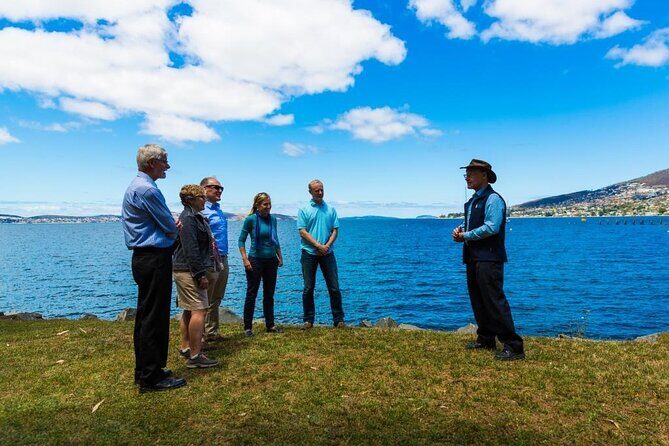
- Battery Point + Salamanca in one walk: Two classic areas, linked with stories that explain what you’re seeing
- Colonial roots, dated and placed: You get the founding context for Hobart (founded in 1803) as you walk
- Sandstone and warehouses up close: You’ll see historic sandstone and Salamanca warehouses that date back roughly 180 years
- Small group experience: Maximum 12 travelers, which keeps the tour interactive
- Salamanca Markets on Saturdays: If your timing lines up, you’ll hear how the market scene fits the precinct’s history
- Central start, easy finish: Starts near Davey Street and ends at Salamanca Place
Battery Point to Salamanca Place: a quick way to get your bearings
If Hobart feels a bit like a mix of old stone and modern life, this tour is a great way to sort it out. You spend your afternoon walking through two of the city’s most character-rich neighborhoods, then you connect the dots—what the colony needed, who lived where, and why these buildings look the way they do.
The big win here is that it’s not just sightseeing. It’s sightseeing with purpose. You’ll pause at present-day landmarks and heritage-listed structures, then hear the human side—issues and people who shaped Tasmania in the early colony period. That combo helps the streets make sense fast, even if you’ve never been to Hobart before.
And yes, three hours goes quicker than you expect. When your route stays compact and the guide keeps the stories moving, you end up paying attention instead of just clock-watching.
You can also read our reviews of more walking tours in Hobart



Meeting at Davey Street and starting with 1803
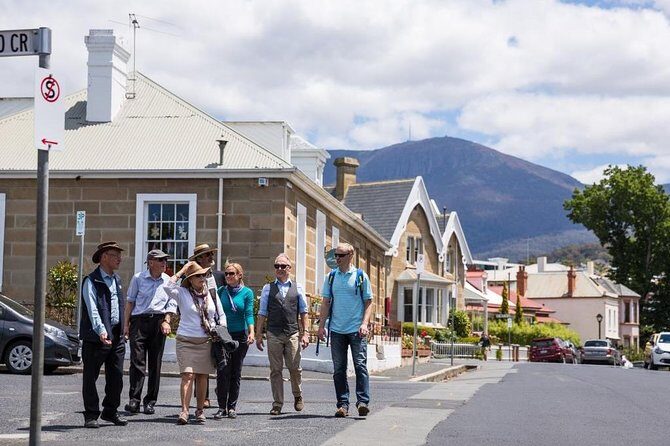
The tour meets at the Tasmanian Travel & Information Centre at 20 Davey St, in Hobart. The start time is 2:00 pm, and the tour runs about three hours on foot.
You’ll begin by learning the core context that guides everything later: Hobart was founded in 1803, and it became the second oldest city in Australia after Sydney. That’s not trivia for trivia’s sake. It sets the stage for why you’re seeing sandstone architecture, warehouse buildings, and a mix of old and new uses in the same areas.
From there, the guide brings you past modern landmarks while tying them to the early-colony story. You’re effectively doing a moving orientation: where the city’s older parts sit, what still looks tied to the past, and what has changed over time.
The historic heart of Hobart: what the guide points out as you walk
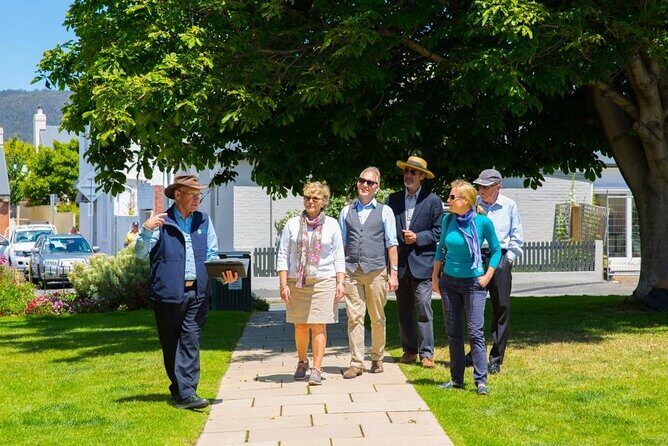
One reason this tour earns such a high recommendation rate is the way guides make the walk feel personal without turning it into a lecture. In the reviews, people highlight that the afternoon can feel interactive, inclusive, and genuinely fun—often helped by a guide’s humor and willingness to get the group involved.
That matters because the route covers a lot of visual ground in a short time. If you only have two hours of energy, you want the stops to do heavy lifting. Here, they do.
You’ll hear about early issues and the people affected by them, then you’ll see heritage-listed buildings as physical evidence. It’s a smart approach for first-time visitors, and it’s also a good option if you’ve been to Hobart before but skipped the deeper explanation of why these streets evolved the way they did.
Battery Point’s sandstone streets: where old buildings do the talking
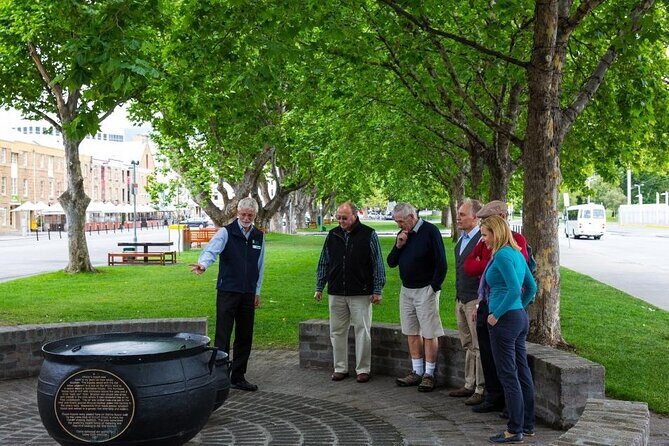
Next up is Battery Point. This is the part of the tour where the city really shows its age—in a good way. You step into streets defined by historic sandstone buildings, including structures described as being built about 180 years ago.
Battery Point also works as a palate cleanser between eras. You’re not just staring at old walls; you’re learning to read them. The guide helps connect the visual details to the colony’s practical needs: what materials were used, how buildings were built to last, and how the area fits into the broader story of Hobart’s growth.
What’s most valuable here is that you get a sense of time. The tour doesn’t treat the past like a museum label. It treats it like something that still shapes the neighborhood you’re walking through.
Practical note: Battery Point is walkable, but you’re still on sidewalks for a few hours. If you’re sensitive to uneven pavement, wear supportive shoes.
Salamanca Precinct: colonial warehouses turned into today’s meeting places
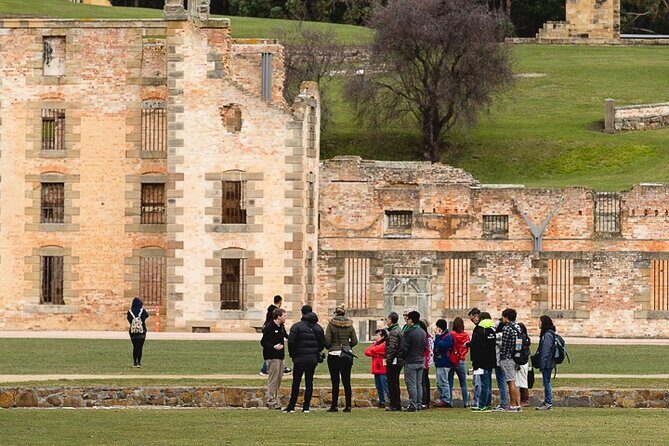
After Battery Point, you head to the Salamanca precinct. This is where the tour’s architecture focus really clicks for most people.
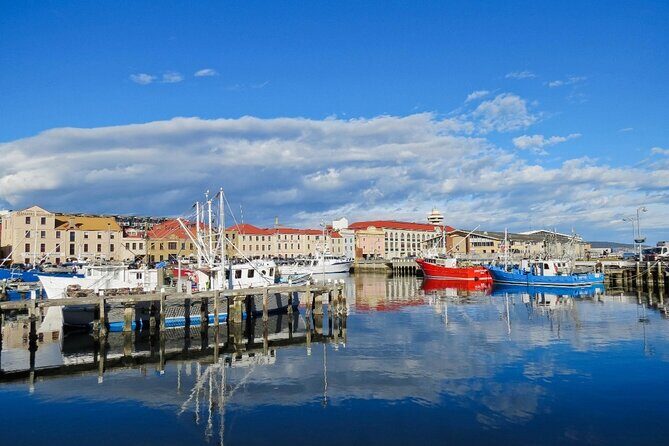
You’ll walk around the sandstone warehouses of Salamanca Place, described as a prime example of typical colonial Australian architecture. These warehouses now function as art galleries, offices, and restaurants. That change of use is part of the story—what was built for one economy later became space for another.
This is also where the tour can help you future-plan. Even if you don’t shop or eat during the walk, you’ll leave with a clear mental map of where things are: which streets to revisit, where the precinct energy gathers, and how Salamanca differs from Battery Point even though both feel historically grounded.
If your timing includes Saturday, you’ll get an added context bonus. Salamanca Markets happen every Saturday and bring in several hundred vendors with art, fresh foods, and handicrafts. The market is a great example of how the precinct’s heritage setting can still support something modern and lively.





How the guide stories make the walk feel worth it
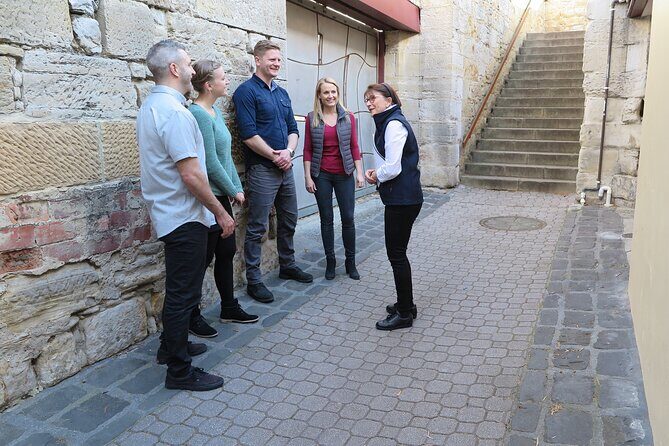
A walking tour lives or dies by the guide. And here, the reviews point to a consistent strength: guides who clearly know Hobart’s story and can explain it in a way that keeps people engaged.
You’ll also see a pattern in the feedback: guides don’t just rattle dates. They help you notice details. That’s why people call the tour informative but also enjoyable and fast-paced. One review even mentions recommendations that went beyond the walk, like dinner suggestions at the Shipwright’s Arms Hotel after hearing the tip from the guide.
For you, that means the tour can do more than entertain. It can help you choose what to do next—where to eat, what to revisit, and what you might otherwise miss if you only wandered on your own.
Price and value: is $43.03 reasonable for 3 hours?
At $43.03 per person, this tour sits in a price band where you’re paying mainly for three things: a local guide, a focused route, and interpretation that turns buildings into context.
You’re not getting food included, and there’s no hotel pickup, so you should plan on spending a bit of your own budget for snacks or drinks later. But the trade-off is that the tour stays tightly organized: small group, central neighborhoods, and a duration long enough to feel like you actually learned the city instead of just doing a quick loop.
For me, the best value signals are the compact geography and the limited group size. That’s what makes a history walk feel personal instead of rushed. And because the tour ends at Salamanca Place, it naturally sets you up for an afternoon or early evening in an area that’s easy to keep exploring.
Timing, weather, and comfort: the stuff that can change your day

Hobart weather can be dramatic. If you’ve got an afternoon that looks questionable, keep expectations flexible.
One review specifically called out heavy rain that led the group to abandon the second half and head back early. That doesn’t mean the tour always ends that way, but it does suggest you should dress for the possibility of wet conditions. Bring a light rain layer and wear shoes that won’t punish you if the pavement is slick.
Start time is 2:00 pm, so you’re more likely to run into cooler temps and changing cloud cover than with a morning walk. Plan accordingly, especially if you tend to get cold.
Also: because the tour is about walking and seeing, don’t schedule it as a “sit and snack” plan. Put it in the middle of your day with time afterward to regroup, grab a drink, and continue at your own pace.
Who this tour suits best (and who might want something else)
This is a strong choice if you want:
- A clear introduction to Hobart’s older parts in one afternoon
- History connected to streets and buildings, not just dates
- A guided walk with up to 12 people, which usually means more back-and-forth questions
- A route that ends in a lively area (Salamanca Place) where you can keep going
It’s also a good option if you’ve been to Hobart a few times already. People who repeat-visit often like tours that explain what they’ve been looking at all along.
If you dislike walking in the rain, or you only want a super short stroll, then you might be happier with something more flexible or indoor-focused. The tour is built around being outside for most of the experience, so weather tolerance helps.
Should you book the Grand Hobart Walking Tour?
Yes, if you want a guided way to understand Hobart’s layout and its colony-era buildings—especially the sandstone look of Battery Point and the Salamanca warehouses—this is a smart use of three hours. The combination of a small group, strong guiding (including the kind of humor and inclusiveness people highlight), and a finish at Salamanca Place makes it easy to turn into a full afternoon.
If you’re traveling with limited patience for weather changes, pack for rain and keep an escape option in mind. Do that, and you’ll get a lot out of a relatively simple plan: walk, listen, look closer.
FAQ
How long is the Grand Hobart Walking Tour?
It runs for about 3 hours.
What time does the tour start?
The start time is 2:00 pm.
Where do I meet the guide?
You meet at the Tasmanian Travel & Information Centre, 20 Davey St, Hobart TAS 7000.
Where does the tour end?
The tour ends at Salamanca Place, Salamanca Pl, Hobart TAS 7000.
What’s included in the ticket price?
A local guide is included.
Is food and drinks included?
No, food and drinks are not included.
Is hotel pickup and drop-off included?
No hotel pickup or drop-off is included.
How large is the group?
The tour has a maximum of 12 travelers.
Are service animals allowed?
Yes, service animals are allowed.
What is the cancellation policy?
You can cancel for a full refund up to 24 hours before the experience’s start time.